Sourberry Stalks and Revitalizing Fire
Written by Silas Osborne, AmeriCorps member at NCRLT
As an AmeriCorps member within the Sierra Nevada AmeriCorps Partnership (SNAP) serving at NCRLT, I am given the freedom to pursue training opportunities that benefit my personal career growth and enhance skills that I can bring back to my host site. Most of the time, these opportunities are so fun, they don’t even feel like training! Let me tell you about a cultural burn I attended in the winter!
During the second weekend of February, me and five other AmeriCorps members in my cohort attended a cultural burn in Mariposa County. It was four days of song and stewardship, hosted by Chairman Goode of the North Fork Mono Tribe and his team that both know the land and love it deeply. I spent much of the weekend snipping sourberry branches tangled from overgrowth to open up the landscape and regenerate this important cultural resource. Left to grow too long without fire stewardship, the branches had become curled, bushy, and undesirable for basket making. We were instructed cut branches cleanly at the base and stack them in piles to be burned. This allowed shrubs to regrow their stalks tall and straight for basket weavers to collect at a later date. Some of my fellow SNAP members joined me in clipping, while others fed and stoked the fires.
Berries could also be harvested during their growing season, small and red. Chairman Goode brought a bowl of gathered berries for people to try, and they lived up to their name! Sour!
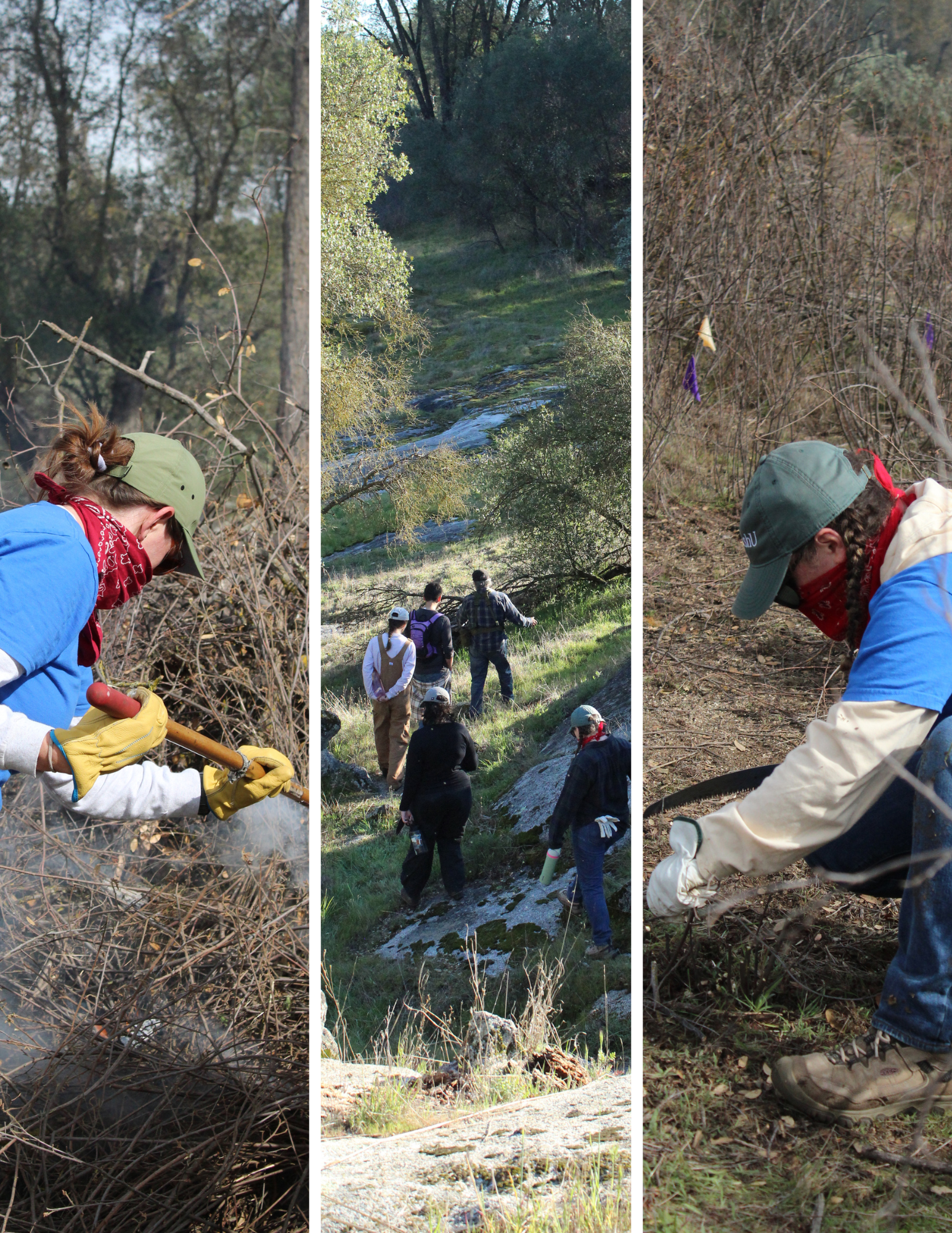
Meet 2 of my fellow AmeriCorps members! -
Kristina (left) is serving at Western Shasta RCD in Redding.
Samantha (right) serving at Tahoe Environmental Research Center on Lake Tahoe.
The center picture shows our group taking a hike of the property!
One large difference between prescribed burning and cultural burning is that cultural burning is very intentional about the size of fires. The North Fork Mono Tribe practitioners did not want fires to get too hot and harm the soil beneath it. All those buried seeds and soil microbes are important in keeping the ecosystem going! They described their ideal fire piles as “beaver hut” sized, no more than 6 feet high and 10 feet long and constructed by fuels less then 6 inches in diameter. Afterwards, fire stewards must gently rake cool ash from the fully burned down fire into the soil to distribute and incorporate the nutrients.
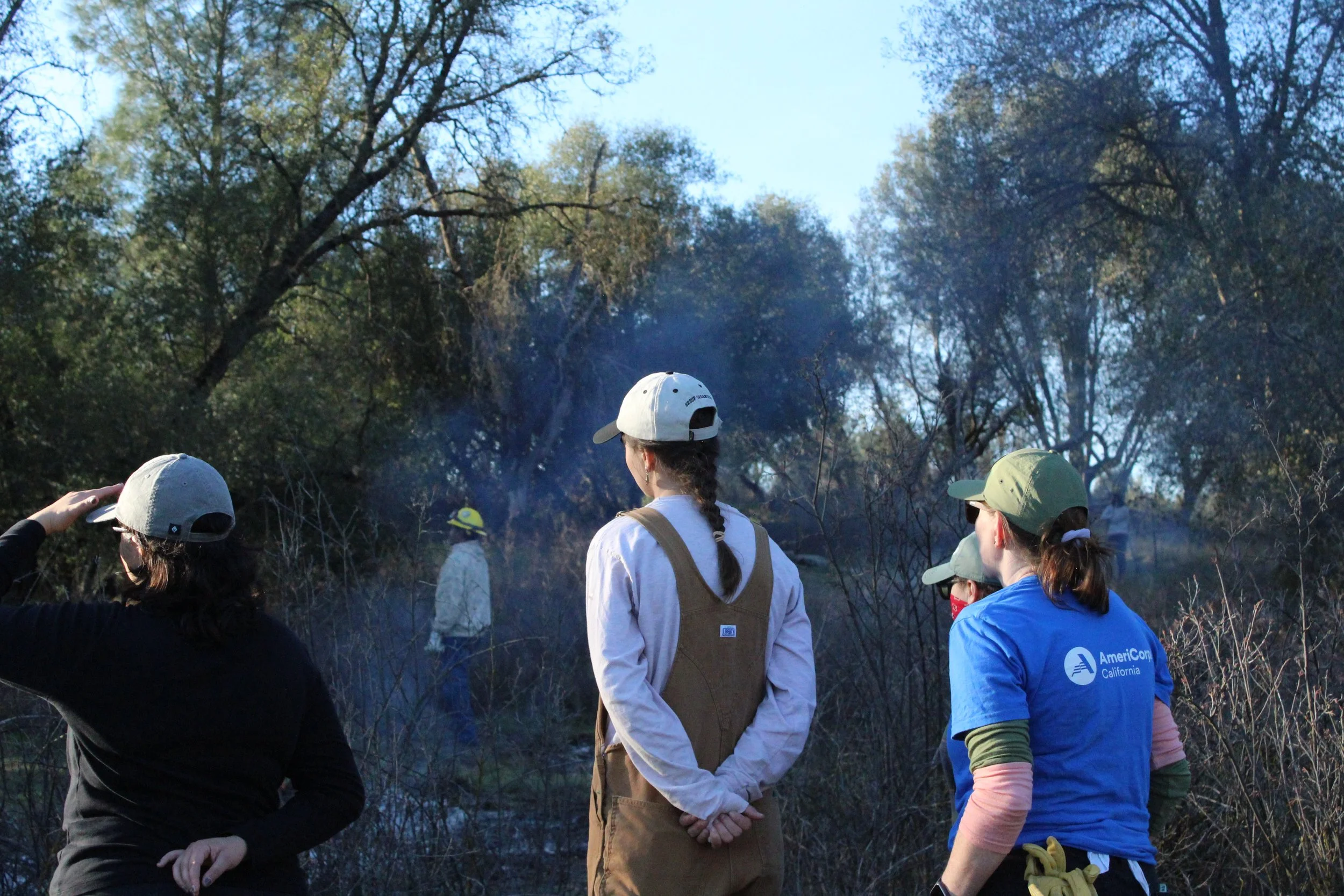
Four AmeriCorps members monitor the smoldering fires!
Fire crew leads emphasized safety through the act of caring both for yourself and those around you, and after a productive day of burning, the knowledgeable and charismatic Dirk Charlie of the Dunlap Band of Mono Indians led us on a hike around the property, allowing us to peek at cultural artifacts and explore the beauty of the area.
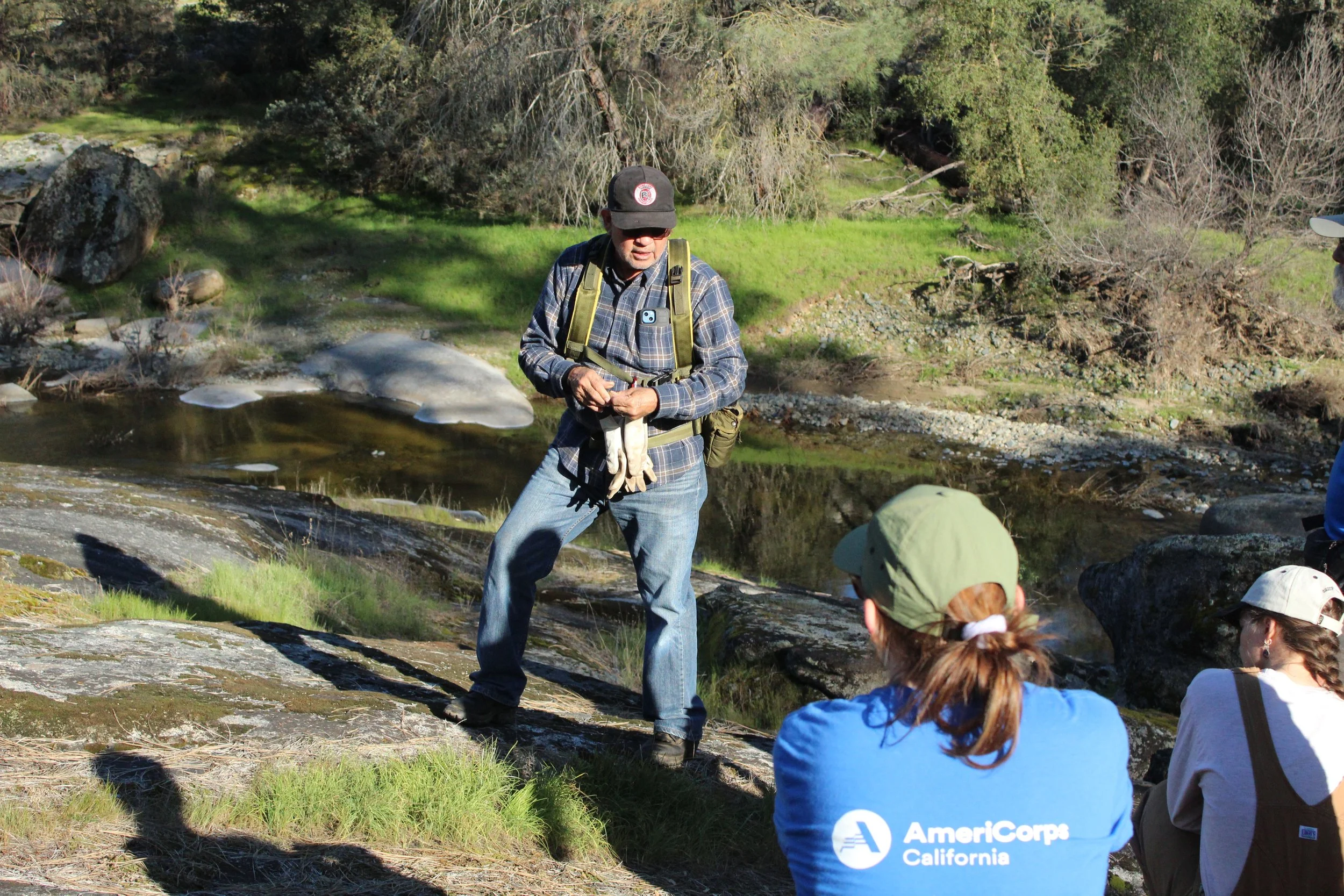
Dirk Charlie of the Dunlap Band of Mono Indians!
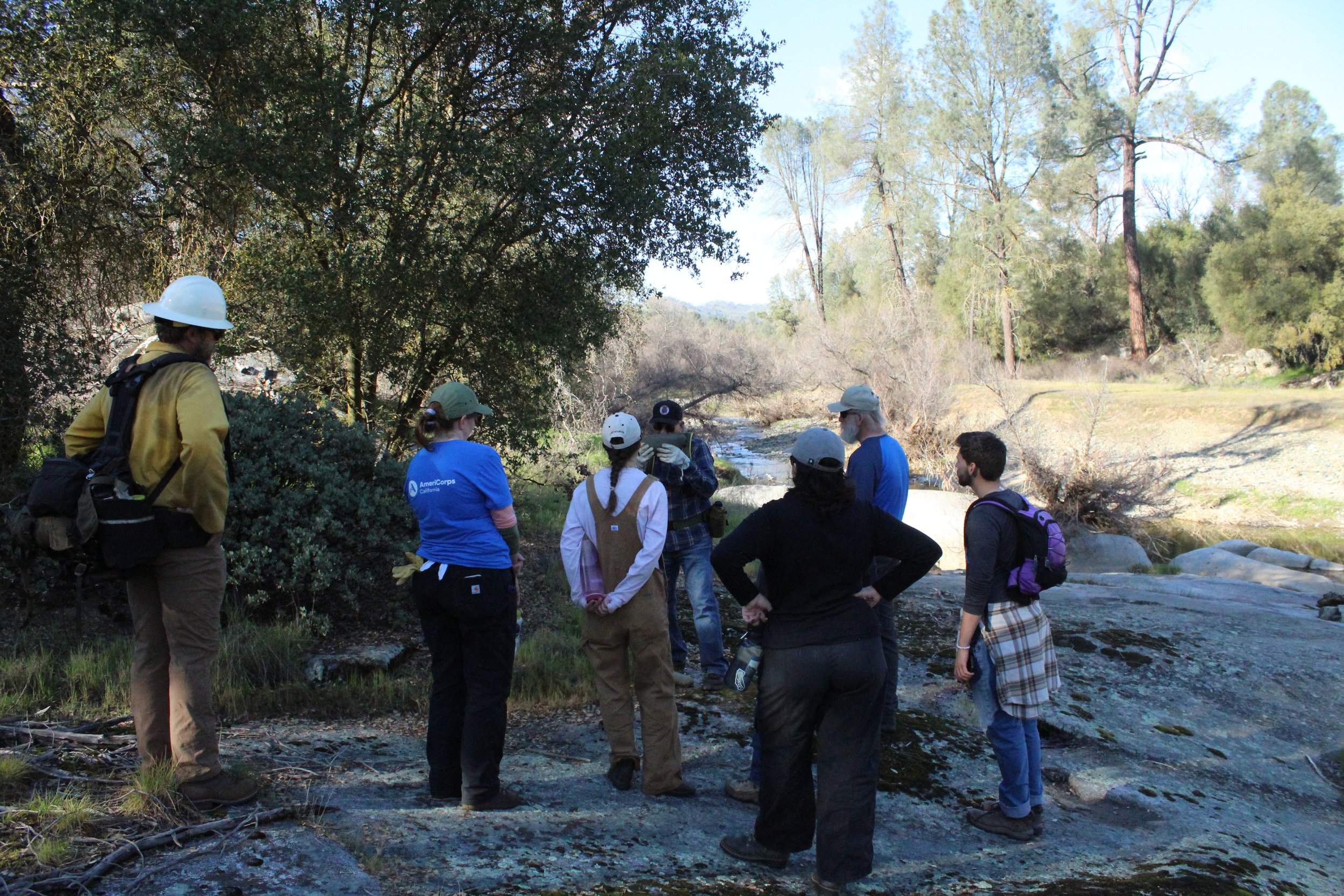
Dirk Charlie showed us a grinding stone!
As a helper of conservation and stewardship tasks at the land trust, this was an important reminder that there is always time and always space to care about the land you are trying to protect. Sometimes it can be easy to get caught up in writing reports and checking things off our list, but all land has complex life at every level: from the smallest soil microbe to the tallest tree, to us! It is valuable to stop and listen, breathe and look, and build connections with the land you live on. I’m so grateful I was able to be a part of this experience!
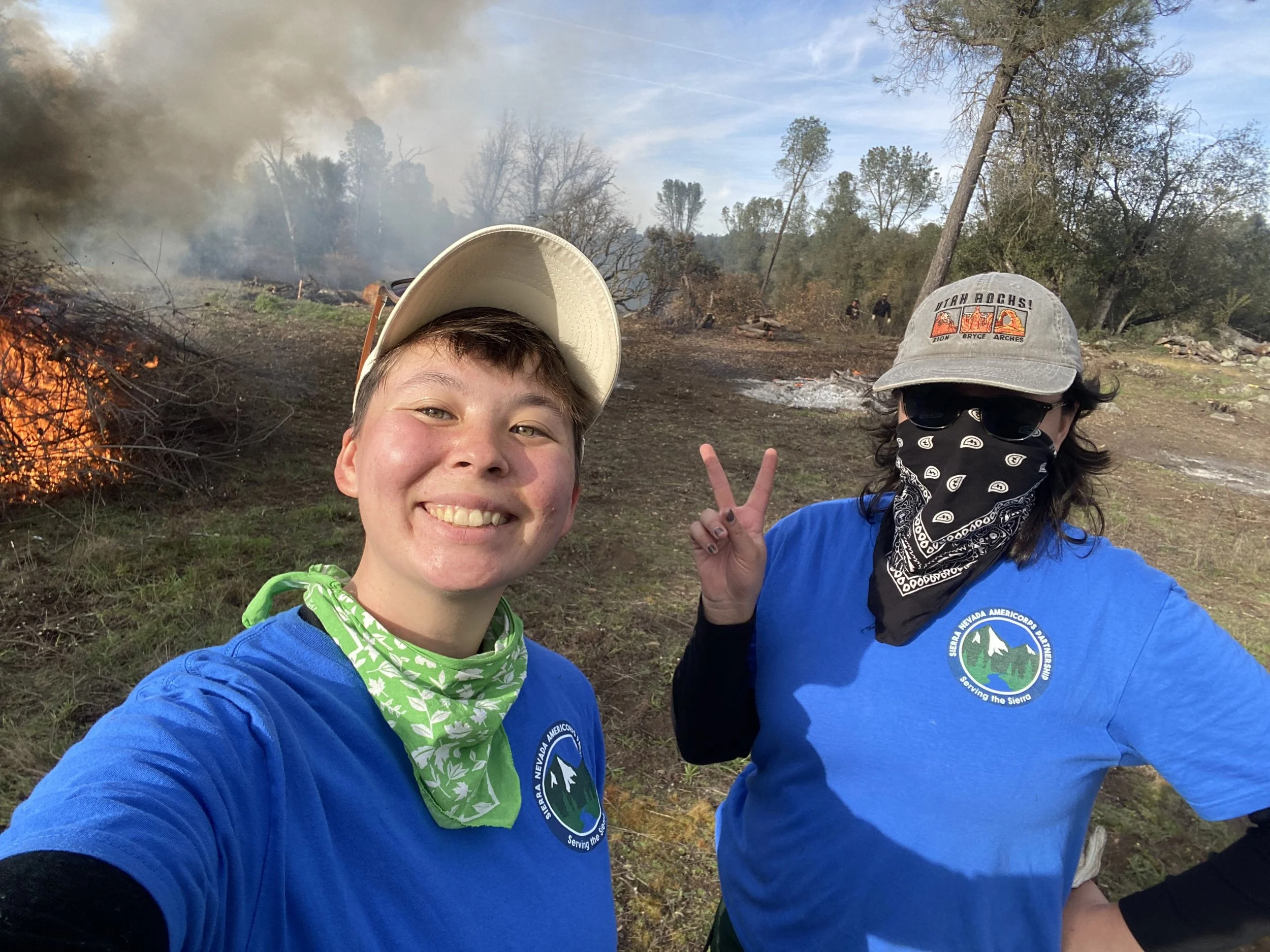
That’s me on the left! Noelle (right) serves as the Partnership and Workforce Training Specialist for the Sierra Nevada AmeriCorps Partnership!
