Vernal Pools at Meridian Ranch!
It was a beautiful morning out at Meridian Ranch. With sunshine and a gentle breeze, it was a lovely start to the day.
We met up with Westervelt Ecological Services on the Ranch, represented by John Howe (Ecological Resources Manager) and Robert Capriola (Assistant Regional Manager). They greeted us with a breakfast spread and a sweet dog, as happy to be outside as we were.
Before our tour, John and Robert talked us through how the property was acquired, their strategies for mapping the property, and the importance of vernal pools!
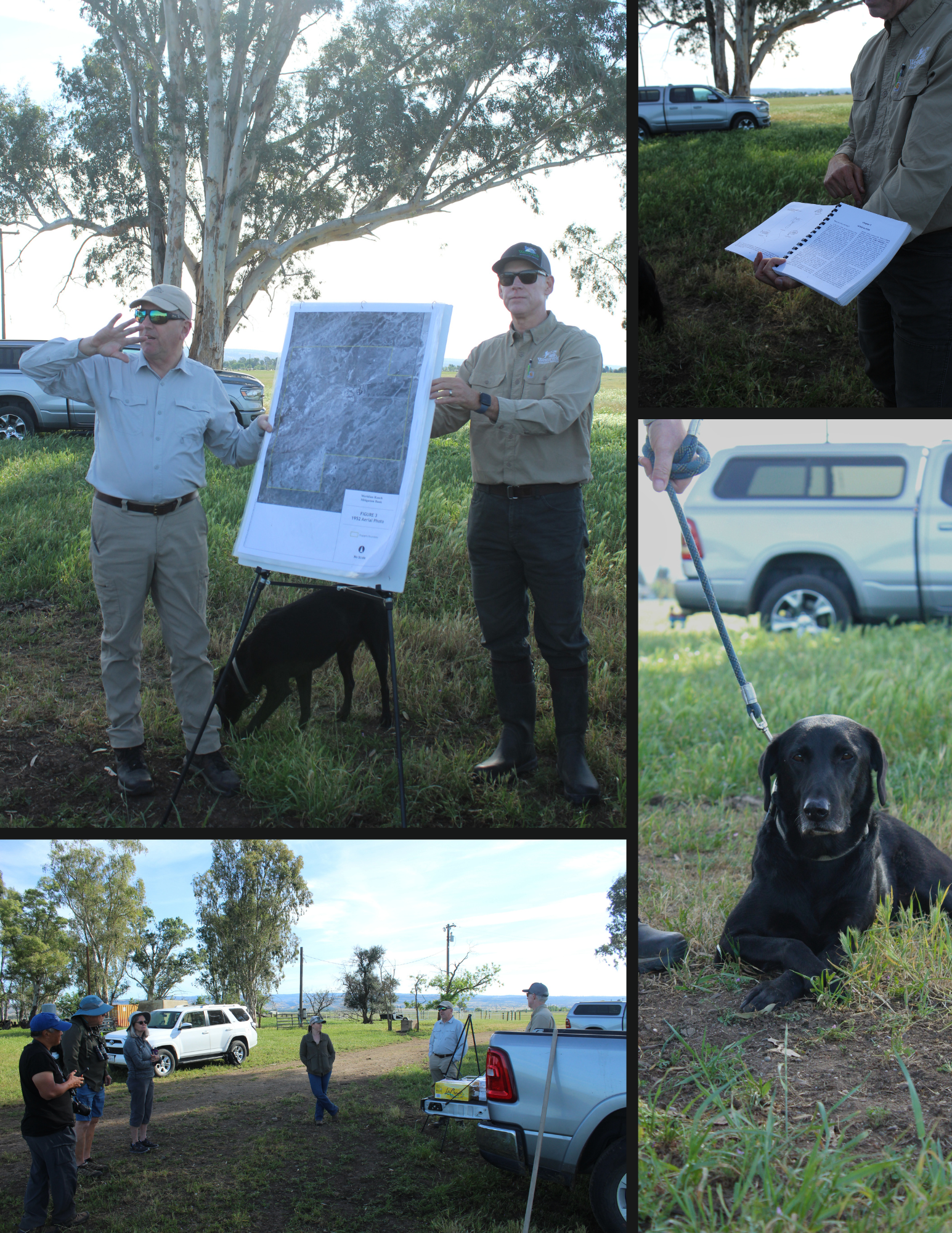
Introductions and information before the tour!
Vernal pools are seasonal wetlands, often within grasslands, that burst to life with unique wildflowers and rare creatures. Filled with shallow rainwater during the winter/spring months and dry by the summer, they support specifically adapted fauna from insects to amphibians, and even crustaceans! John brought his wading boots and dipnet in the hopes of scooping up some endemic fairy shrimp from within the pools to give us a peek!
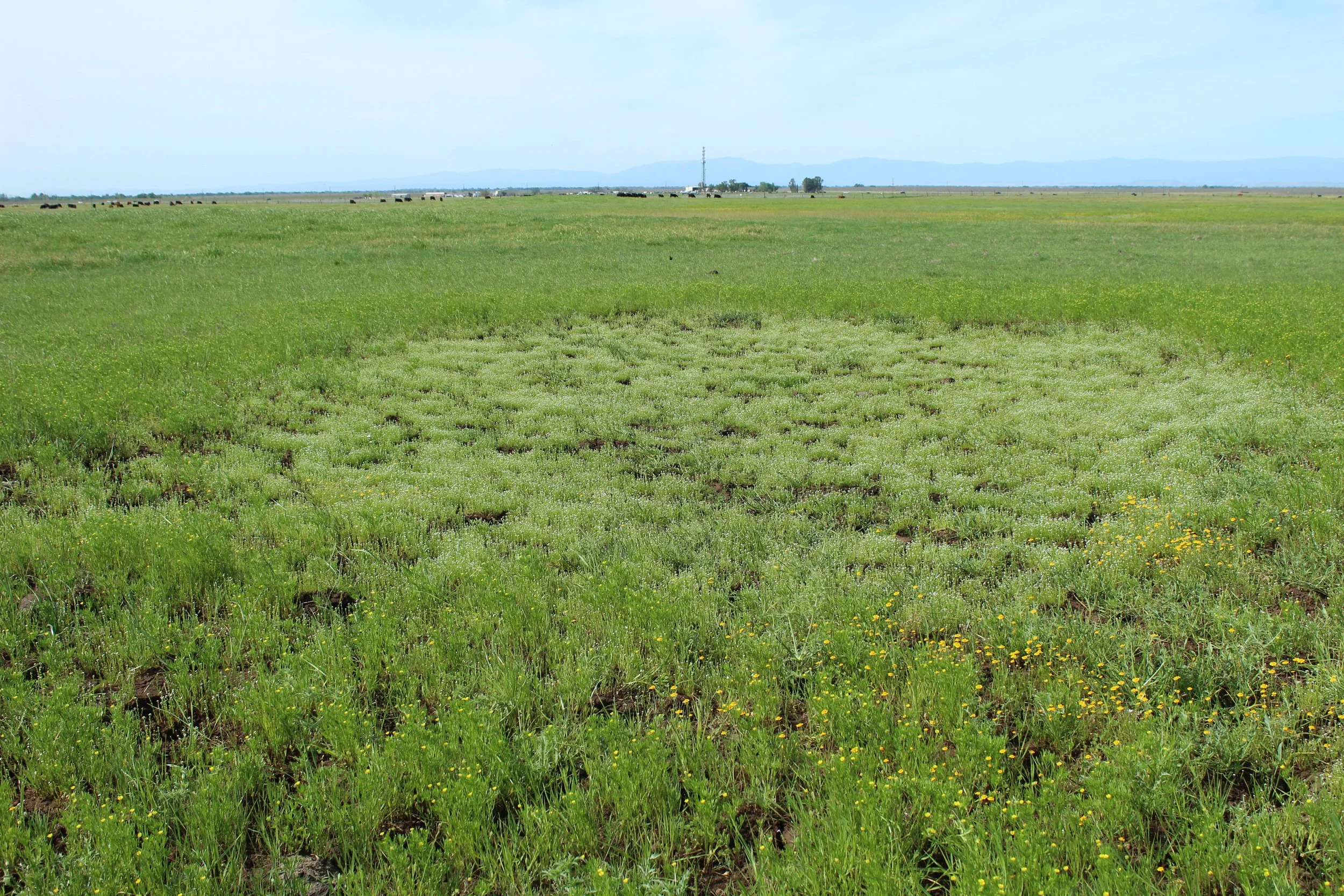
A vernal pool, dried and occupied by flowers!
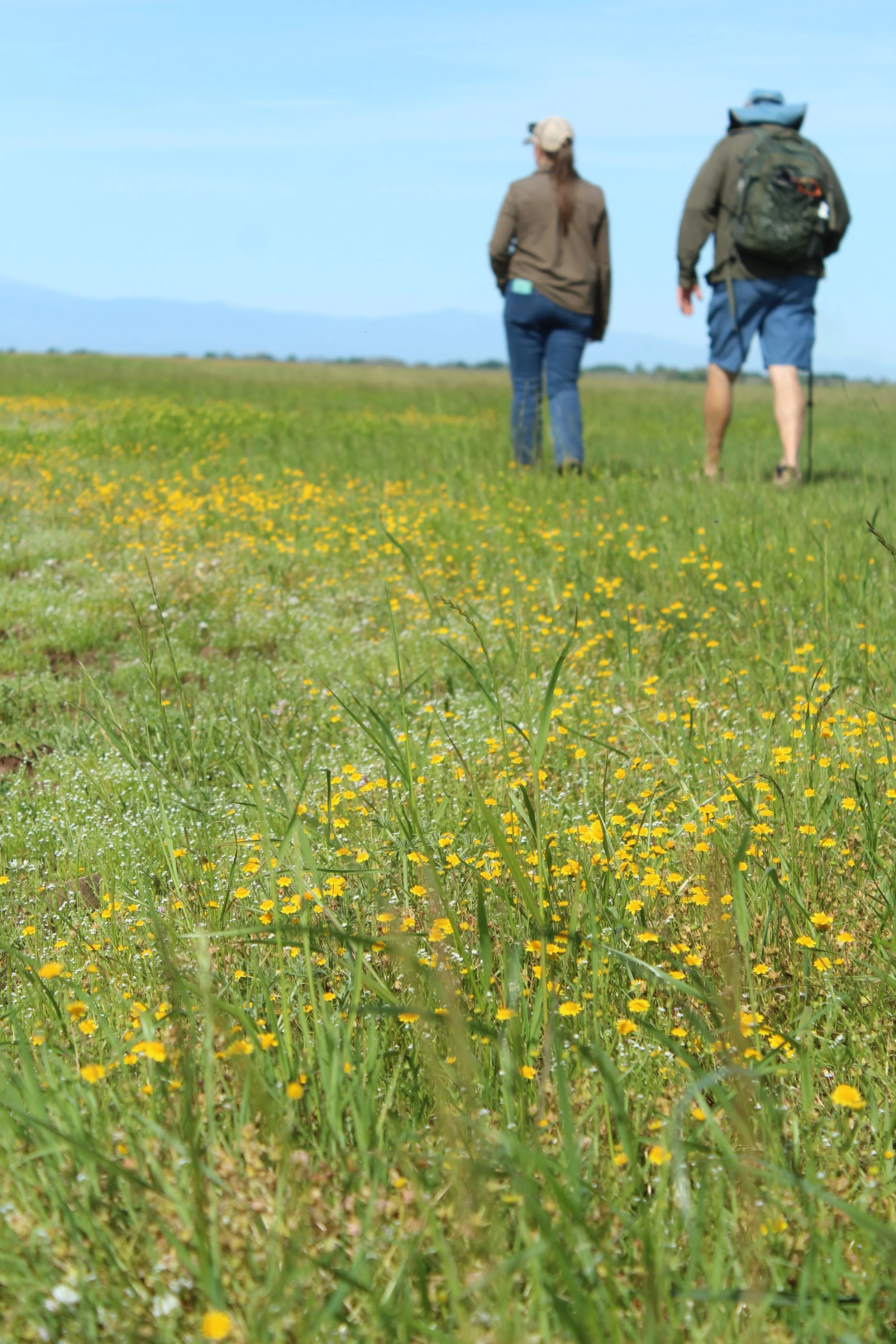
Here’s another view of a vernal pool with a characteristic ring of bright flowers around the edge!
The water also supports migrating waterfowl and pollinators attracted to the blooming flowers! We saw lots of bees buzzing around, hopping from tidy tips to meadow foam to gold fields. It was green, yellow, and white as far as the eye could see.
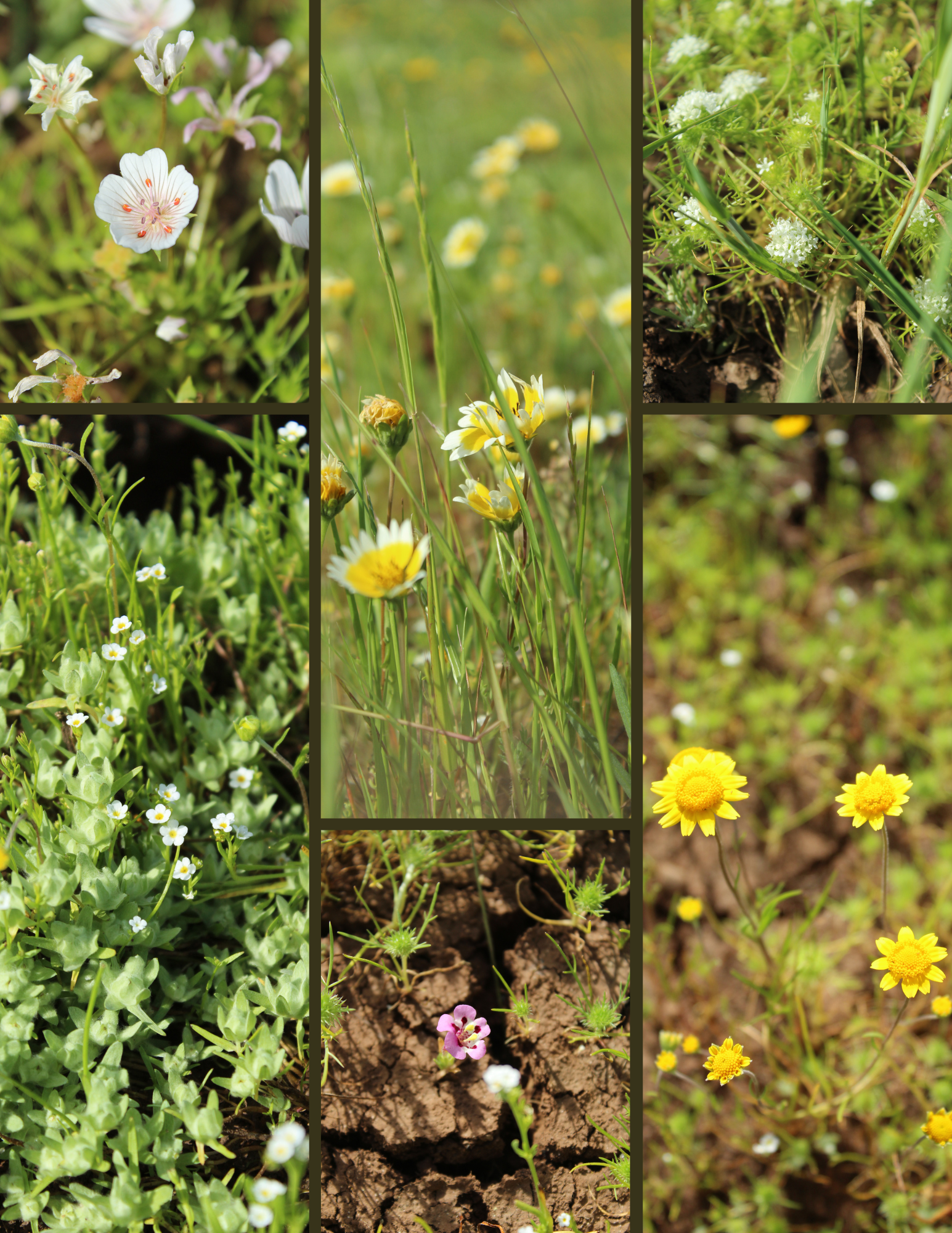
A variety of flowers often found in or around vernal pools! This collage includes tidy tips, meadowfoam, goldfields, tricolor monkeyflower, and more!
From there, we wandered the fields, crouching to look at delicate petals and colorful blooms. We listened for birds as our boots walked upon dried earth and wavy grasses, munched low in some areas by the teenage cattle present on the property. Curious followers, they at time got close to the group, staring with big, dark eyes, and then playfully running away. Cows, or other large grazers are important to these vernal pool systems as they keep down invasive plants.
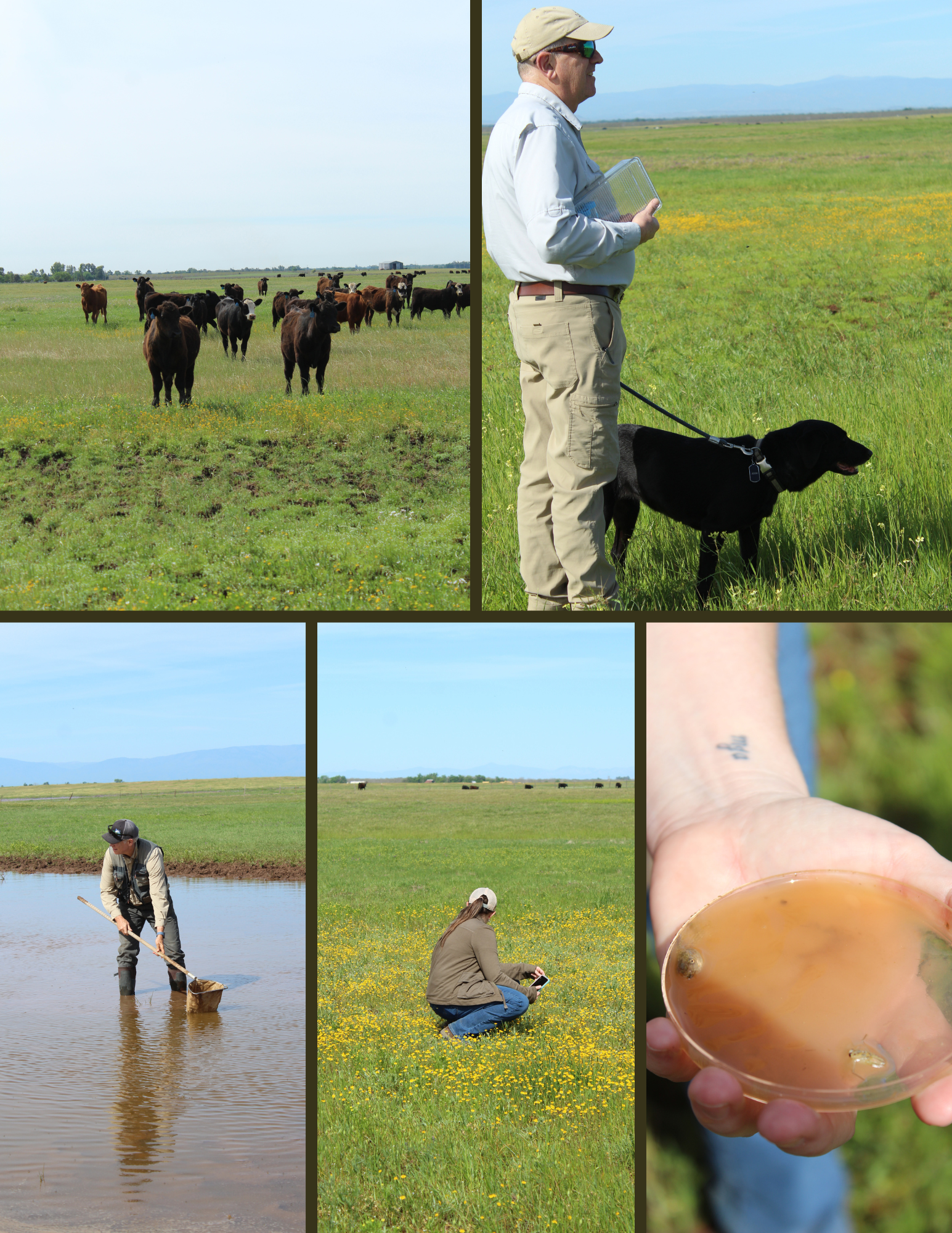
A collage of dipnetting, flower viewing, and COWS!
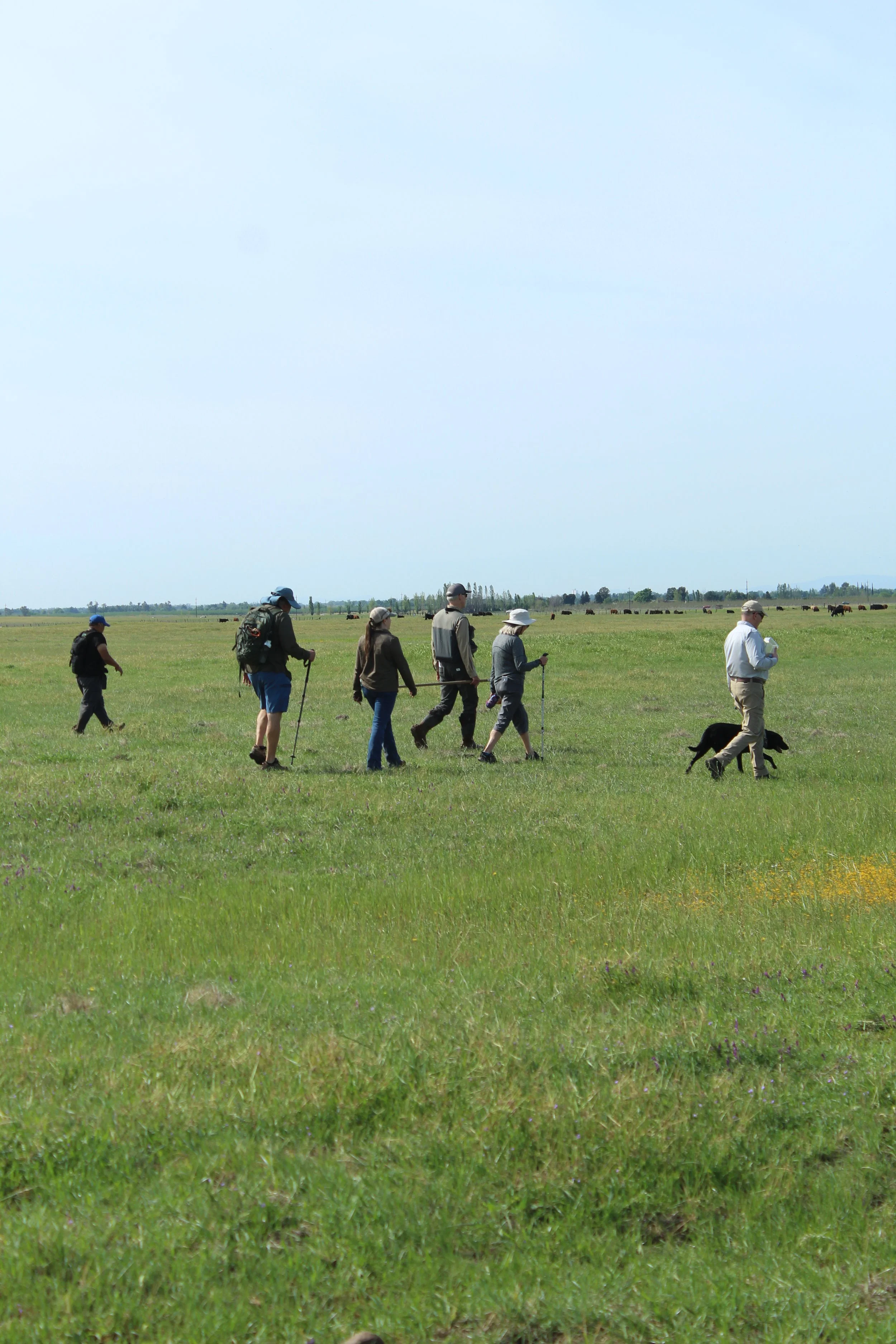
What a lovely day! Can you spot the cows in the background?
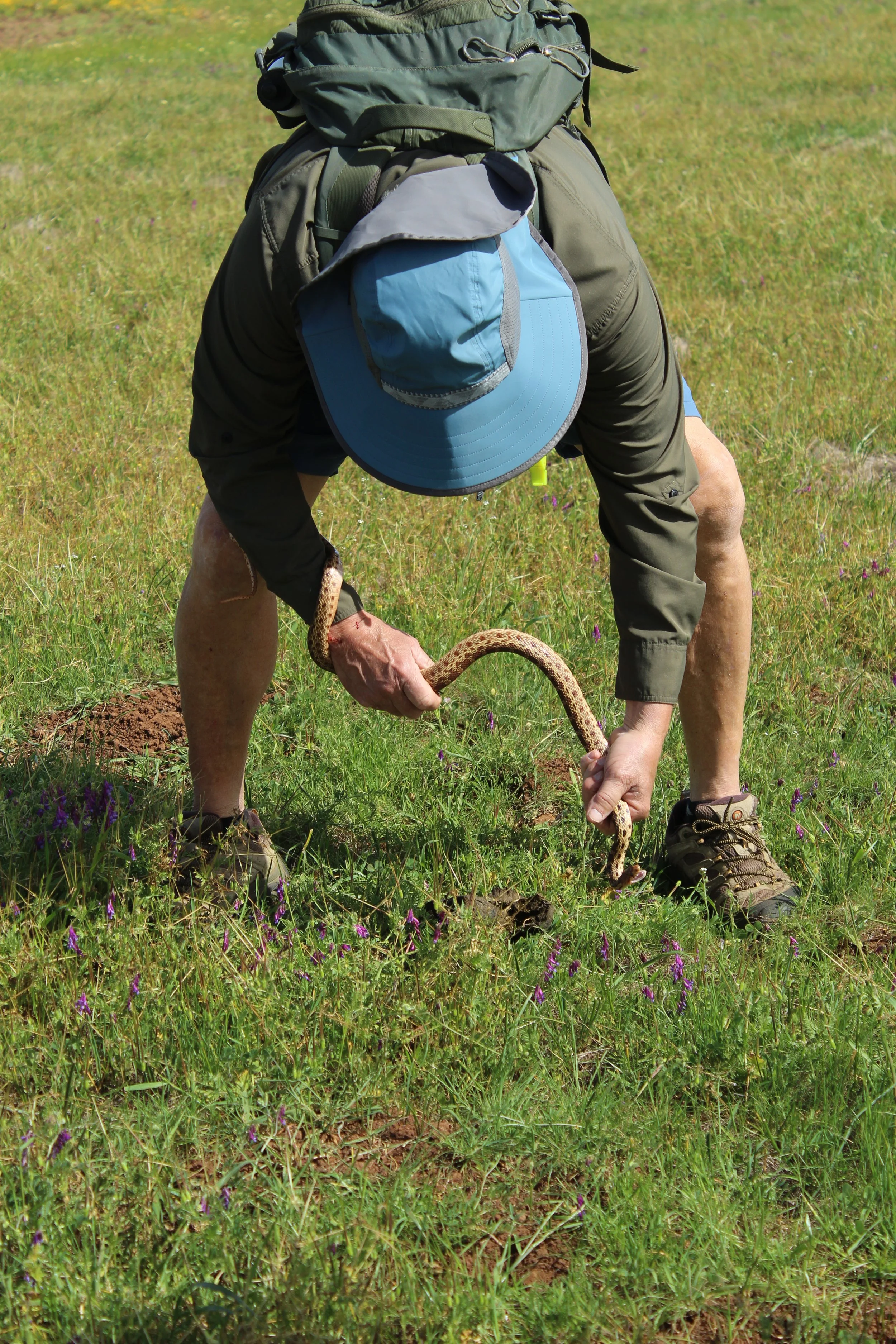
One of our tour participants caught hold of a snake!
Despite a lack of rain, some pools still contained water, into which John waded through the mud to use his dipnet. While we didn’t find any mature fairy shrimp, we did catch a few other small critters which were put in clear tray for us to look at.
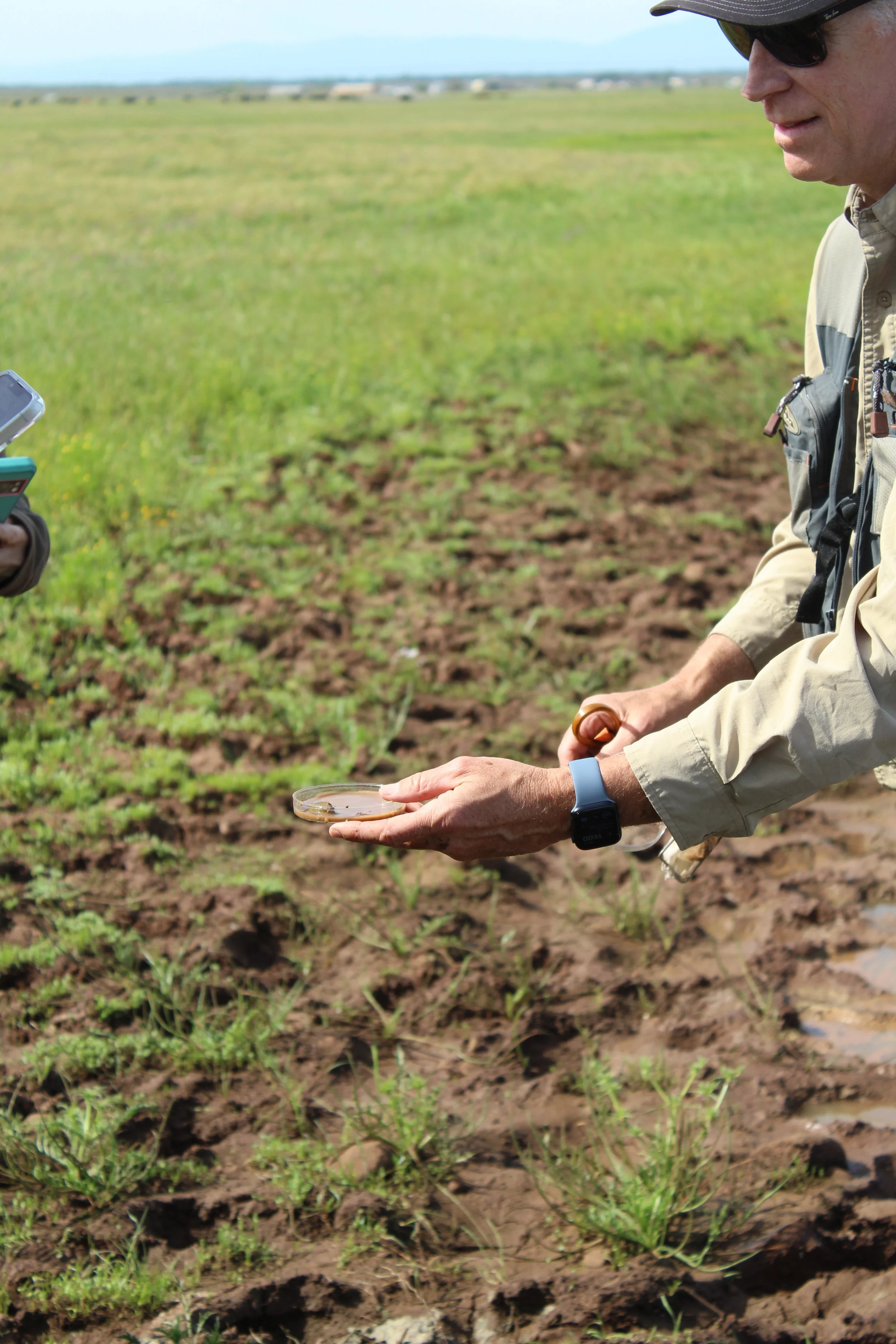
John Howe shows us what his net picked up from the pool!
As the sun rose higher and it started to really warm up, we concluded our jaunt of the property and drove to a shady spot along the river for a nice lunch and a pleasant conclusion to the day.
A big thank you to Westervelt Ecological Services for sharing their knowledge of the property, giving both tour participants and NCRLT staff a good look at the fantastically diverse and beautiful delight that is vernal pools!
Learn more about Westervelt Ecological Services here https://wesmitigation.com/
Read about fairy shrimp here https://www.fws.gov/species/vernal-pool-fairy-shrimp-branchinecta-lynchi
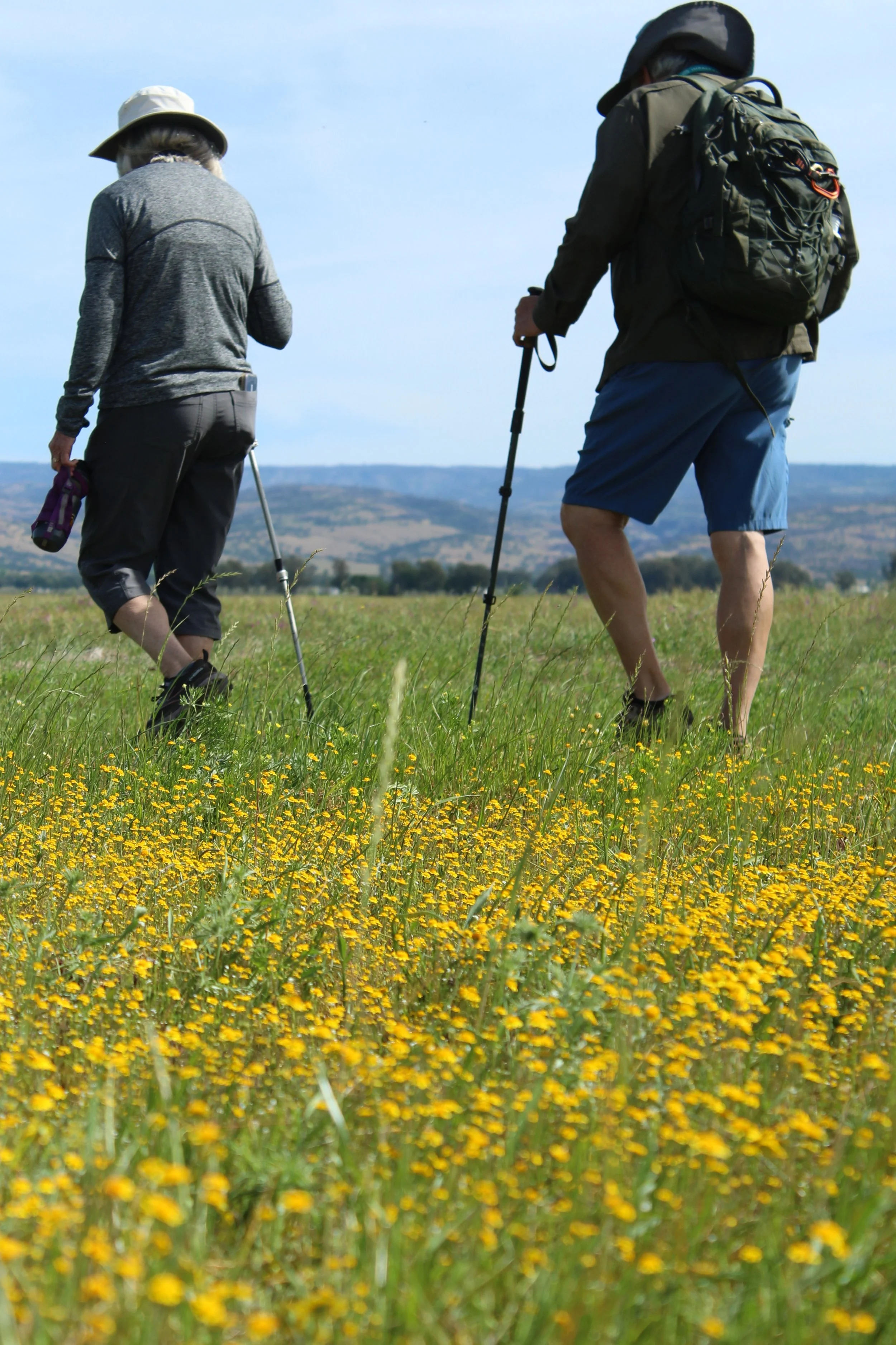
Such a stunning view don’t you think?
